“Rab - Behind the Fabric”

Magazine feature for Rab, focusing on their ethos and ideology demonstrated through a repair-centre tour and workshop with Greater Goods.

“One night in 1973, while most Brits were settling down in their mustard recliners, listening to The Rolling Stones, a man named Rab Carrington found himself stranded, alone in Buenos Aires, Argentina. He was there on an expedition to climb mountains in Patagonia, but somewhere along the way, his gear got lost. All of it. He was now 7,000 miles from home. No mustard recliner, no Rolling Stones, and no equipment to climb the mountains he had been dreaming of for months. 

Creature comforts aside, going home now wasn’t an option. Carrington had climbed hundreds of mountains in his lifetime, and wasn’t going to let a trivial lost gear issue put a stop to his South American leg. With no money to buy new gear, he got into contact with a longtime friend who was producing mountaineering equipment in Argentina at the time. His request was simple -Do you have a job for me?’ 

As it turns out, he did. Stitching sleeping bags. Hardly a glamorous vocation, but Carrington agreed. Perhaps it would even mean he could create a sleeping bag with his name on it. 

What he could never have predicted, was that this stopgap job - little more than a means to an end - would eventually see his name stitched onto hundreds of thousands of sleeping bags. 

Just as Carrington’s thirst for altitude was an obsession, producing sleeping bags would become one too. By 1981, after returning from South America, he began stitching his own sleeping bags in the loft of a tiny terraced house in Sheffield. He obsessed over every tiny detail – the exact number of baffles, what size they should be, and how much down should be in them. Carrington was a perfectionist, and his years of experience in the mountains told him what worked, and what didn't. 

After handing out prototypes for friends to try on multi day expeditions across the Peak District, demand snowballed. Pretty soon his loft was filled to the ceiling with sleeping bags. Then his bedroom followed suit. And so did the living room. As quickly as he had found the job in Argentina, Carrington was signing the lease on a local factory in Sheffield. It was here that Rab evolved from someone’s name, into a fully-fledged outdoor brand. 

Now, fifty years on from that fateful trip to South America, Rab stand as one of the UK’s finest outdoor exports. With hundreds of stockists, gear for nearly every outdoor pursuit, and a presence on the summits of almost every peak in the country, it's undeniable that Rab have come a long way from stitching sleeping bags in a loft. But one of the main reasons for this widespread success, is the values that Rab Carrington adhered by when he was laying the foundations for the brand, haven’t been lost. If anything, they’ve been built upon... 

This is something we have been lucky enough to observe first hand. We’ve long admired Rab, but when an opportunity arose to properly get behind the fabric of the brand, we packed our bags full of questions and boarded the train to Alfreton. 

Yes, Alfreton. Not the kind of place you expect to find the beating heart of a world-renowned outdoor brand, but that’s exactly the point. Just like repair, humble surroundings are another carried over Carrington principle. It’s here, tucked just off the M1, that expedition suits are pumped full of high-grade down, prototype packs are mocked up in cardboard, sleeping bags are patched, and hundreds of jackets are given new life. 

At the gates of the facility, we were warmly welcomed by Matt and Paul, two blokes who had been part of the Rab story for 16 and 11 years respectively. They navigated the warehouse as if it were their own living room, proudly pointing out intricacies regarding the recycled packaging systems and waste-sorting processes. Despite their comfort, both remarked on how much has changed at Rab over the years. - “Only a decade ago we worked out of one building that doubled as the head office and warehouse. Now there are two more here in the UK, distribution hubs in Rotterdam and the US, and warehouses in Canada and New Zealand.”  

Not bad for a company that began life in a loft. 

As the pair guided us around the warehouse, it began to sink in just how tidy everything was, right down to the loading bays. If it weren’t for the steady hum of machines, you might wonder if anything was actually happening at all. But behind the neatness lies efficiency, not showmanship. Rab are more interested in doing things properly than appearances. 

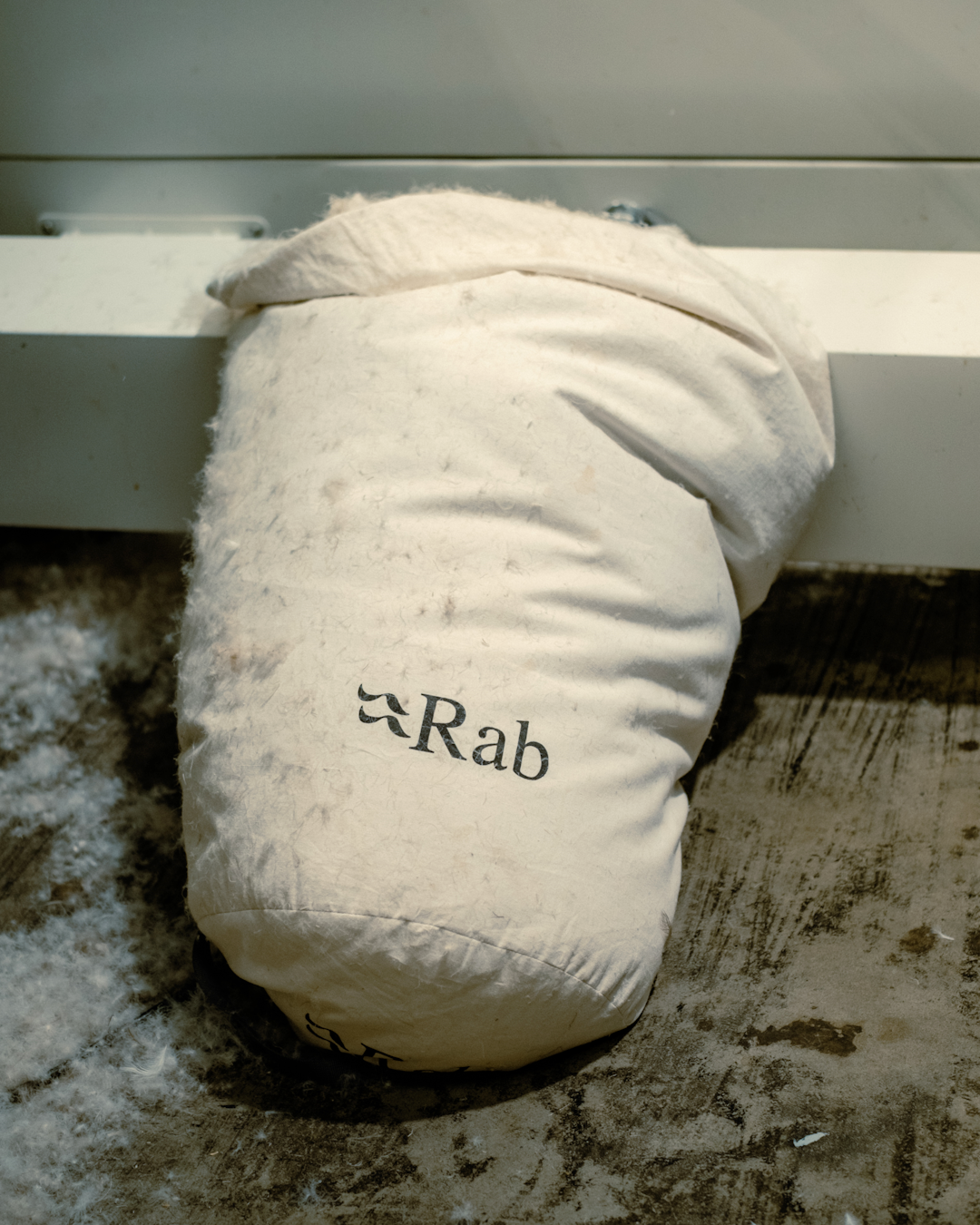
Even the brand's approach to sustainability felt grounded and real. Yes, there were still huge bales of plastic – like any modern company – but it wasn’t hidden away or glossed over. Instead, Matt & Paul explained how it’s collected, repurposed into packing pellets, and given another life. At the opposite end of the factory, another set of bales – this time offcuts from old sleeping bags and jackets sent in by customers sat waiting to have their down recycled and reused. Everything in the facility has a second purpose. 
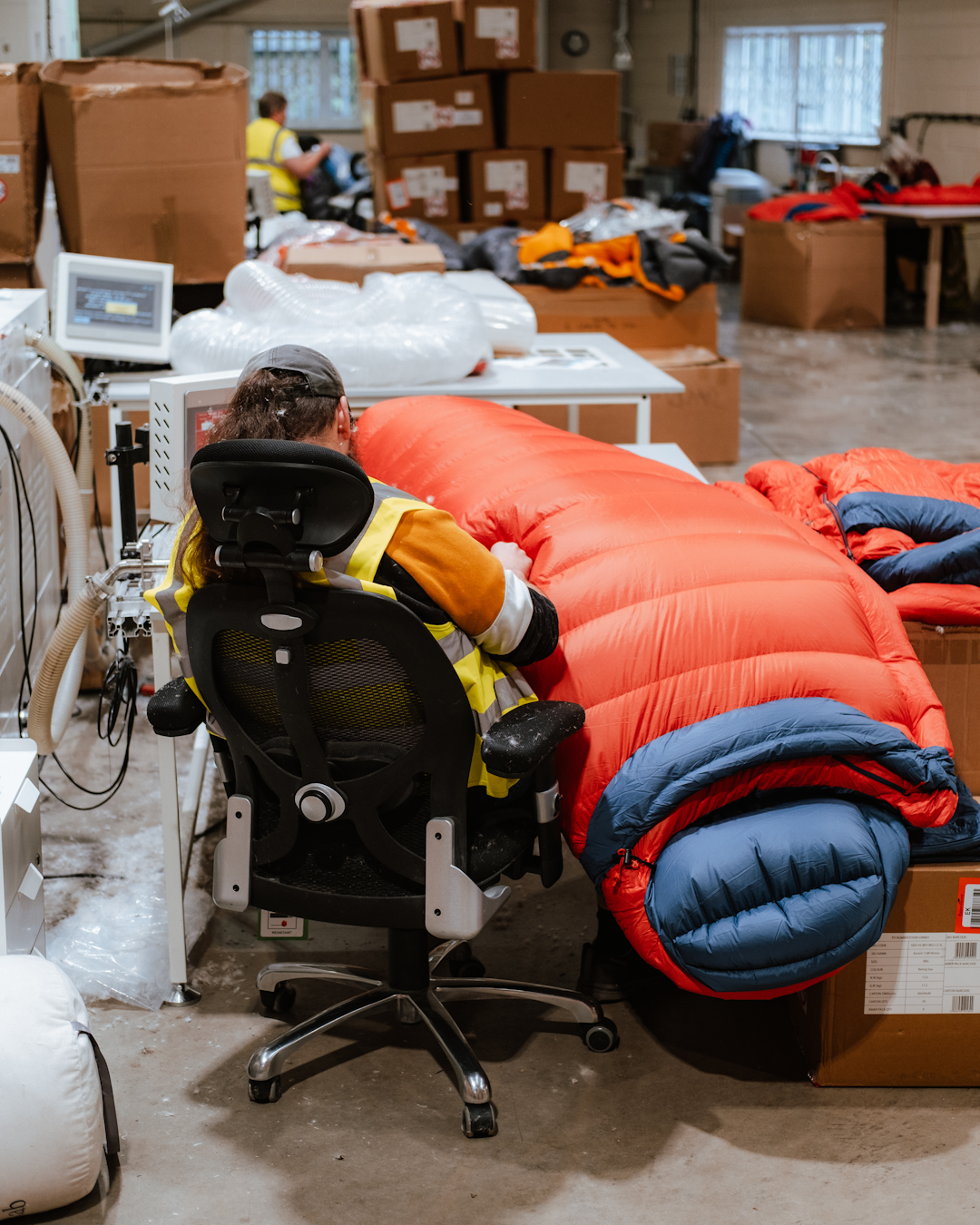
As we moved deeper into the facility, we reached the entrance to the down filling room. The moment the double doors opened, we were met with a flurry of sound and feathers – a vivid hum of production. Inside, skilled staff worked in focused rhythm at their filling bays, operating pedal-controlled machines that deliver precise grams of down into each baffle.  

Down itself hasn’t changed since 1981 – it can’t. It’s a natural material. What has changed is the way it’s handled. Matt explained that the machines had only been introduced eight years ago. “Before these, everything was hand-stuffed. These machines were revolutionary.” 

Despite the new technology, producing down clothing is still very much a craft of precision. The bright yellow expedition suits that surrounded us – the ones that keep people alive when they’re standing miles above the clouds – are made in batches of five. And it still takes around a week to stitch and fill each batch with the highest quality down. Even with the new tech. 

This dedication to excellence isn’t just confined to production either. While wandering through the facility, we met Rowan one of Rab’s designers - who has developed the latest range of sleeping bags - quietly tinkering away with a garment we’re not yet allowed to tell you about. 

“The best thing about being here,” he said, “is I can walk downstairs and talk to the team about tweaking a fill weight or trying a different baffle layout. They’ll do it straight away. Most brands have to send an email halfway around the world and wait weeks for feedback.” 

From the down filling room, we moved into a space we’d heard endlessly about – the Service Centre. Stories of serious ladies, who could repair ten baffles in five minutes, and neck twice the amount of tea while doing it, had reached us long before the visit. Inside, a handful of them sat focused, heads down, sewing machines clattering in noisy unison. 

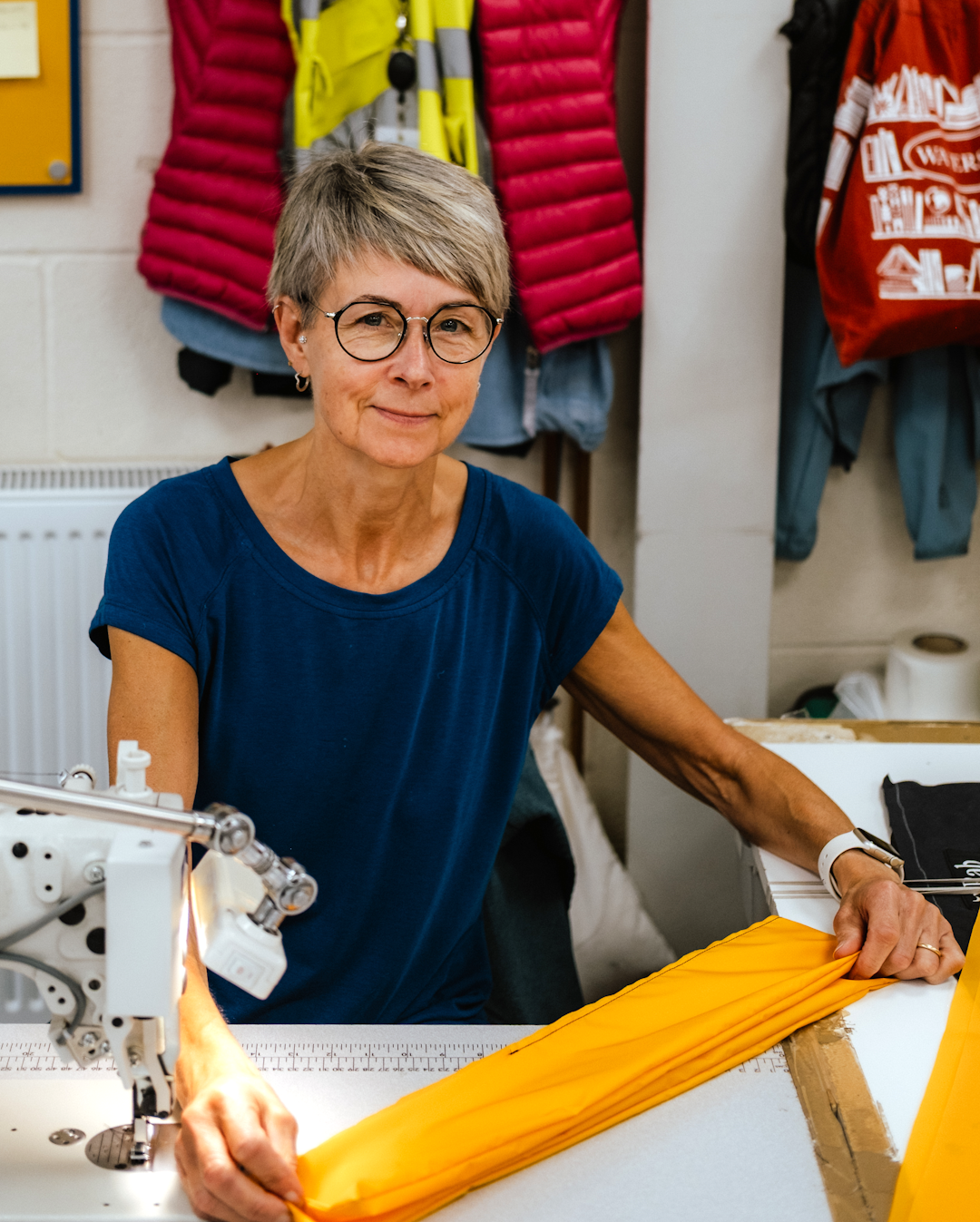
One of them, Tina kindly looked up to chat. She old us how she had started working for Rab in 1989, only eight years after the brand was initially founded on that Sheffield factory floor. Tina had been face to face with Carrington for many of her early years at the company, him functioning as a mentor for any & every query.   

Looking down at the sleeping bag that sat between the sewing machine’s jaws, it was clear that it wasn’t a recent product. This sleeping bag had seen some sights. Tina told us it isn’t uncommon to be repairing the same garments again, and again: ‘We see loads of really old clothing and equipment come in. The oldest is probably like late ‘80s sleeping bags and jackets. There’s some stuff that comes in that I actually remember making in 1989.’ 

Perhaps even more staggering than the lifespan and continual repair of certain products, is the items the staff find alongside them: ‘I’ve had a few pockets with dog poo bags in them. Also found underwear in old sleeping bags. But to be honest, it’s mainly glasses and keyrings, sometimes money, things like that.’   

Tina then told us that these items are being found more regularly – not because people are now wearing more underwear – but because repair is growing exponentially for Rab.  Tina and her team carried out 12,000 repairs last year alone. That’s 12,000 products saved from landfill and returned back to the outdoors. 

Just over her shoulder, a rail of mismatched jackets caught our eye – patches of colour stitched together like functional artwork. These items were part of Rab’s Second Stitch repair program, which uses recycled fabrics and salvaged components from other items. The result is gear that’s not only repaired but reborn – each piece carrying its own visible story. 

‘Second Stitch utilises recycled fabrics and spare parts salvaged from other items. The different fabric types and contrast colours create a patchwork that encourages conversation about how and why the repair was needed.’ 

Before we could distract Tina and her crew any longer, we were swiftly ushered away for lunch, and then promptly dropped off at the train station. The time had come to wave goodbye to Alfreton, and we did so feeling genuinely inspired. Everyone we met – Matt, Paul, Tina and the dozen other employees – embodied the same values Rab Carrington instilled over fifty years ago: humility, quality, and a quiet determination to keep things alive. Repair for Rab isn’t an afterthought, it’s part of their DNA. 

But what isn’t in Rab’s DNA, is shouting about things. Unlike other companies, Rab’s relationship with repair is deep-rooted, not performative. Which is exactly why we thought it deserved to be shared.  

This thinking, lead to us working together on a collaboration with Greater Goods, the London-based studio known for their inventive reuse of materials. Together, we hosted a workshop at The Epicentre in Ambleside – a fitting venue for a brand so connected to the real outdoors.   

Jackets, sleeping bags, and scraps of once well-travelled Rab fabric were reimagined as crossbody bags. With expert guidance from the Greater Goods team, participants of all abilities & ages cut, stitched, and shaped new designs, each one carrying its own outdoor history in every thread. 

The day unfolded like a celebration of imperfection – people swapping stories, laughing over crooked seams, and leaving with something handmade, unique, and impossible to buy. But beyond the fun, the workshop reflected a larger truth: repair and reuse aren’t just trends – they’re the future of outdoor clothing. 

It’s an attitude Rab have embodied since the very beginning. When Carrington found himself stranded in Buenos Aires without gear, he taught himself to sew sleeping bags. That same resourcefulness and respect for longevity still runs through the brand today. 

The Epicentre workshop felt like a natural continuation of that story. Proof that the end of one journey doesn’t have to mean the end of the gear that carried you through it. Sometimes, all it needs is a little love, and some extra thread.”

Next
Next

WRITING: TAION - Modular by Nature