All that Remains: Tracing Barbour's Transport Jacket

Presenting work for Barbour & SEVEN STORE, accompanied by a write-up on my experience in the Barbour archive

“In South Shields, the winters are long and cold, the summers are short and cool, and it’s windy and cloudy year-round. To most, the northern coastal town lacks any real meteorological appeal, but it was these miserable conditions that led John Barbour to South Shields back in 1894 — not because he enjoyed cold weather, dark evenings and perpetual rain, but because he saw an opportunity to make & sell his jackets to protect the local sailors and mariners from the worst of the British weather. Since that fateful day over 130 years ago, Barbour has left an indelible mark on South Shields — a brand woven into the town’s identity and pride.

Personally, I also feel proud of Barbour, despite growing up 272 miles from South Shields. I was born and spent the first 18 years of my life in rural Herefordshire — a place where people sound like pirates, drink like them too, and wear Barbour jackets as if their lives depend on it. Because once upon a time, they did. Both my grandparents had long Barbour jackets living by their back door — nestled amongst chunky wool knitwear and mud-caked boots. These garments were the workhorses they used to stay dry while renovating their farm, until one day, many years ago, they were quietly retired to collect cobwebs.

I would’ve been 16 when I first noticed the coats. After spending an increasing amount of time on eBay, I began to learn that Barbour products had something of a resale value — even if more spiders than humans had worn them in recent years. So, with my Grandad’s blessing, I dusted off the cobwebs and did what any skint teenager would do: I sold his jacket for £33. At the time, I was buzzing. Now I realise I sold a piece of my family history for peanuts. Since that day (August 17th, 2019, as per my eBay receipt), I’ve subconsciously kept Barbour at arm’s length — maybe because I moved to Liverpool shortly after, or more likely because of the guilt I felt from selling a family heirloom.

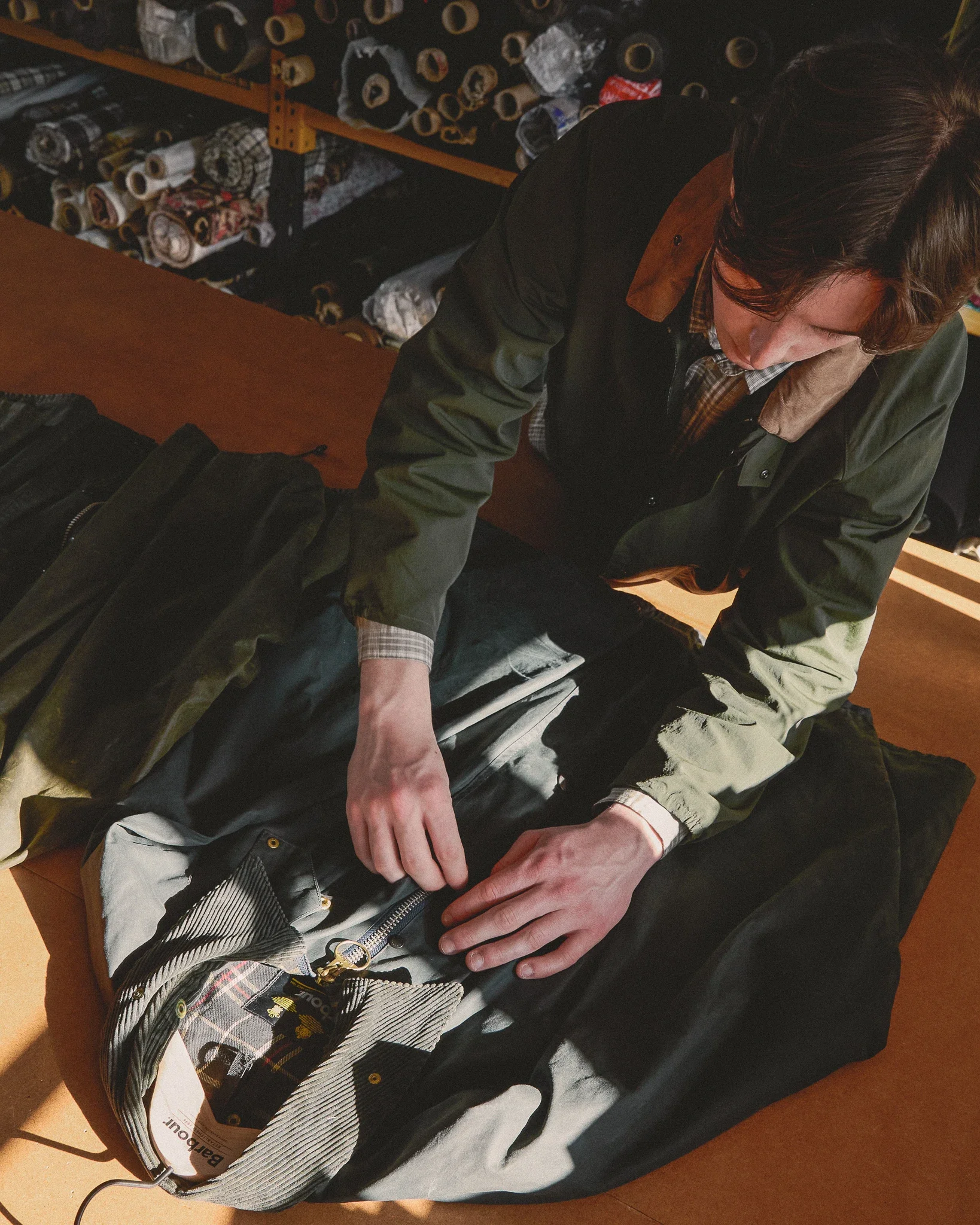
So, when SEVENSTORE asked me to join them on a tour of the Barbour archive room in South Shields, a load of childhood memories came flooding back. And it was those memories that made it very easy to say yes. When we arrived in South Shields, it was bright and sunny. The staff quickly assured us this was an anomaly, and once we stepped into the archive room, that became even more apparent. Heavily used wax jackets — showing the scars and bruises dished out by the weather — hung from a series of rails. Walking into that room was visceral. Every crease, frayed seam and patched elbow held clues of a life once lived.

My grandparents had worn their Barbour jackets like a second skin. And it was obvious the previous owners of the jackets in front of me had too. A cabinet in the corner of the room displays everything the repair team has found left in garment pockets, ranging from matches and lip balm to playing cards and lighters. I’ve always thought that a forensic analysis of someone’s favourite piece of outerwear could tell you almost everything about their lifestyle, and this cabinet proved that in the case of a Barbour, the investigation doesn’t have to be all that forensic.”

“Before I had a chance to go full True Detective, the man I was there to meet walked in. A man called Gary, dressed in a plain T-shirt and simple trousers. In personality, appearance and accent, everything about Gary was measured. But this elusive figure is one of the masterminds behind every great Barbour product of the last 25 years, including the Transport Jacket.

I don’t ride horses, and I've never gone on a fishing boat, but I ride a bicycle almost every day. And for that reason, Barbour’s answer to cycling wear, the Transport Jacket, has always captivated me more than any other garment the brand produces.

I sat down with Gary to discuss his years at Barbour, and naturally, our conversation drifted toward the Transport Jacket. He explained how he’d come into ownership of an early Muddy Fox mountain bike and quickly found riding in a Bedale Jacket to be wholly impractical. The lengthy cut meant the back of the jacket acted like a canvas, slowly showcasing all the grit, grime and mud a typical bike ride would kick up. To solve the issue, Gary cropped the Bedale and added a skirting to the waist and sleeves to help insulate the wearer from further debris while riding. His solution was incredibly simple, but entirely effective. Since then, the design of the Transport Jacket has hardly changed.

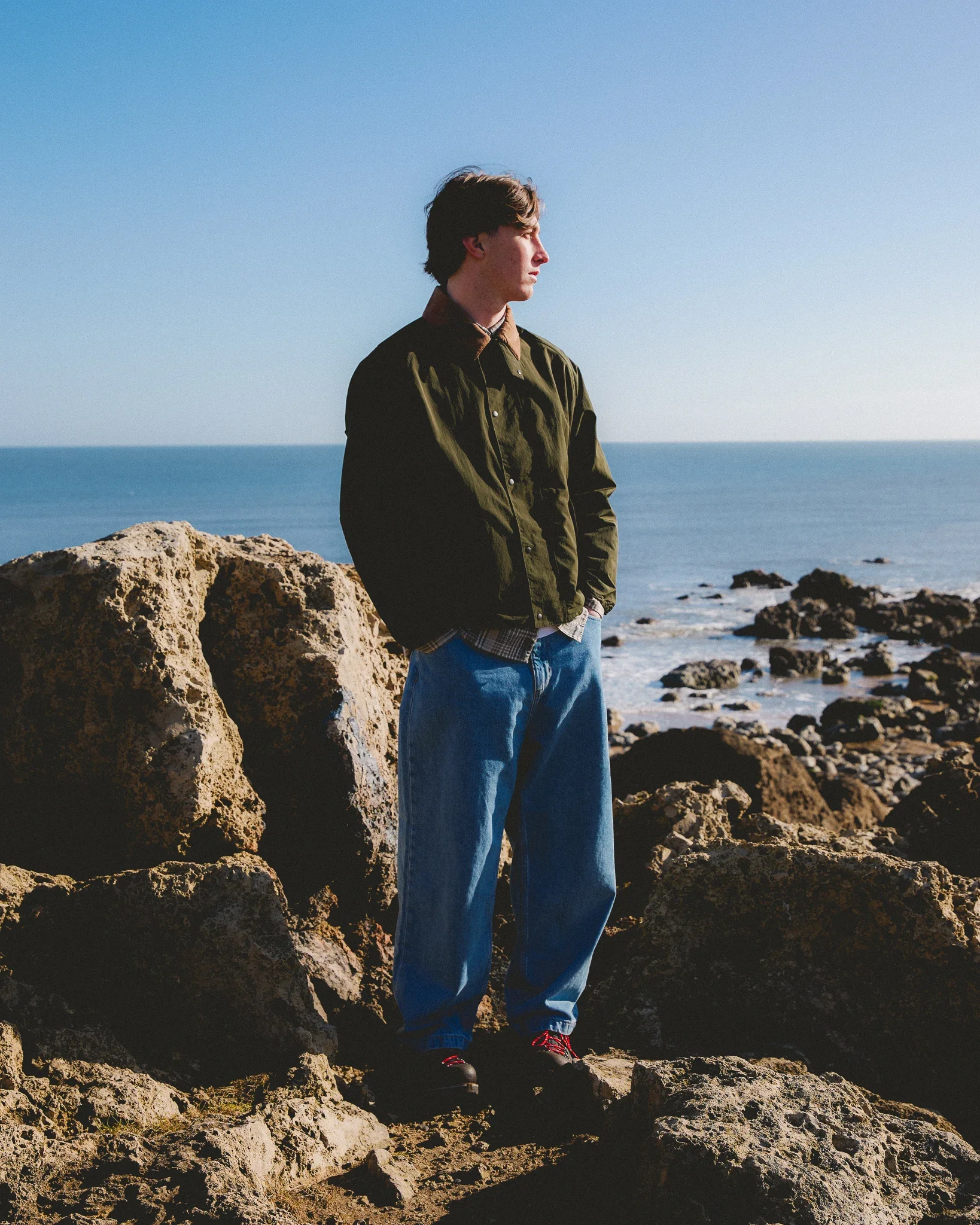
Until this season, when Barbour reimagined the Transport in a lighter, slimmed-down form. It’s a more refined version of the jacket Gary created over 20 years ago — proof that Barbour isn’t content with surviving on heritage alone. And out of everything in that archive room — Spey fishing jackets, C.P. Company collaborations, military overcoats and battered Beauforts — this new Transport Jacket aligned with me more than any other garment.

In a different life, perhaps I would’ve stayed in Herefordshire, got a job in agriculture and worn a waxed trench coat like my Grandad. But that didn’t happen. I moved to Liverpool. And then I moved to Manchester. The closest thing I’ve currently got to a farm is a Farmfoods. In my day-to-day life right now, I have no real requirement for skirted arms and wax coatings. Perhaps one day that might change, but for now, the new version of the Transport makes total sense for me. It has everything I need and nothing I don’t. Its cropped fit works perfectly for riding my bike around the city, and it also aligns with the proportions I naturally gravitate towards.

After perusing the archive a few more times, the time came to say goodbye to Gary and the Barbour team. I boarded the train back to Manchester and used the entire 2h 17m journey to reflect on what I’d experienced that day. The main emotion I felt was pride. Seeing firsthand the impact Barbour has had on global culture, fashion and design gave me a renewed admiration for a brand I grew up around. But somewhere between York and Leeds, as the train gently rocked from side to side, I also started thinking back to that £33.

At the time, it felt like a sizeable victory — the kind of entrepreneurial triumph that feels monumental when you’re sixteen and jobless. But seeing the archive that day reframed what I’d secretly known for a long time.

That jacket, and those jackets hanging on the rails, weren’t just garments. They were objects that had lived full lives alongside their owners. They’d been repaired, rewaxed, passed down, forgotten and rediscovered. They weren’t really meant to be “sold on” in the way I’d treated my Grandad’s. But with the new Transport Jacket, I’m determined to right the wrongs of my past. Not in some grand or profound way. Just by wearing it properly. Riding my bike in it, stuffing the pockets with receipts, lip balm and bottle caps, and letting it slowly pick up the same kind of patina as the jackets hanging in that archive room.”

Previous
Previous

STYLING: Portfolio

Next
Next

WRITING: Rab - Behind The Fabric