“Montbell Brand History”
Magazine feature for Montbell, relating their newly opened Keswick store to the brand’s attitude & resilience
“Brands, especially ones that produce clothing, often twist and contort to fit the changing needs of their customer, or maybe more importantly, the changing demographic of their customer. As they come into and out of fashion, their customer base changes, and unless they adapt, their lifespan is sure to be shortened.
Although often the most pursued strategy, managing a brand's reactions to coming into and out of fashion isn't the only path to success, there is another, polar opposite, way...
Stay exactly the same. Produce consistently fantastic product. Product that isn't bothered about succeeding in any way not related to its own merit.
More and more brands seem to be picking the former route, and less and less the latter. This makes sense - producing consistently great product and not changing is difficult. Each year costs are guaranteed to increase, but demand is not - all of a sudden having a couple of years in fashion and flogging large volumes of on-trend product doesn't seem like such a bad idea...
Resisting this temptation is hard, especially when the going gets hard, and not many brands are as familiar with this as Montbell, who are set to open their first ever UK store this spring.
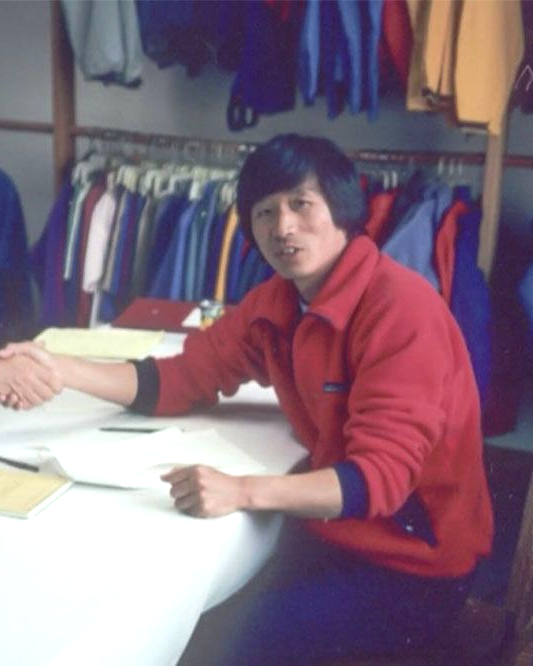
If you were to visit a Montbell store back in 1985, and then visit the same one in 2025, they wouldn't look that different, and neither would the products. Very little about the brand has changed - it was founded to provide hard and soft solutions to outdoor problems, and that's exactly what they're still doing today. Montbell is a through-and-through outdoor brand. Function is second to nothing, something instilled in the brand by founder, Isamu Tatsuno, 50 years ago.
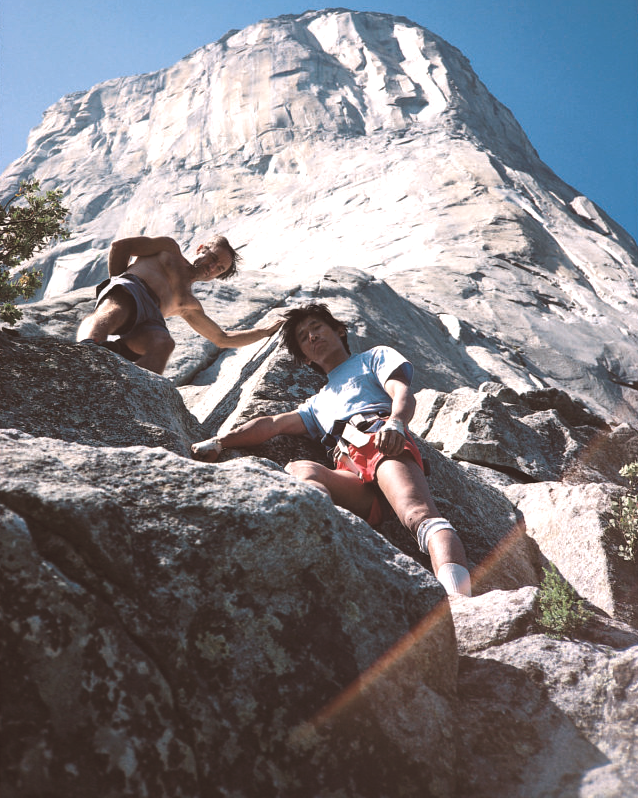
1975 was the year Montbell was introduced to the world, Isamu Tatsuno was only 28, but he'd already seen and experienced more than most people at 82. Born in post-war Osaka he had fled the city's recently battle-scarred streets in search of rock, something he had developed a fascination with from reading a copy of ‘Heinrich Harrer’s White Spider: The Classic Account of the Ascent of the Eiger.'
Enthralled by Harrer's death-defying account of scaling the Eiger back in 1938, Isamu set his sights 14,000km East of Osaka, in Switzerland.
After a handful of years teaching himself how to provisionally climb - a discipline that was as alien to the Japanese as Toblerone- in 1969 he found himself standing at the foot of the Eiger, and less than 24 hours later he found himself standing at the top. His swift expedition saw him come second in the history books for successful Japanese ascents of the aptly nicknamed 'Murderous Wall,' but first in regards to speed. This wasn't by mistake either, his strategy was to travel light and fast, and it had worked.
Tatsuno's triumph in Switzerland didn't go unnoticed in his home country, but upon his return there was still very little knowledge about rock climbing. He made it his duty to change that, and at the age of 23 opened the country's first rock climbing school.
Opening a school that pertained to such a niche activity was risky, but fortunately, Tatsuno had picked the right time to open its doors...
In 1970 Japan was changing as citizens were beginning to find fault with the country's systems - students were protesting against unpaid internships, the women's liberation movement, ũman ribu, was gaining momentum, and more feminist groups were starting to form. Self-expression was in, and what better way to express yourself than by joining as school where they taught you to climb rocks.
Tatsuno's climbing school would prove to be a success, teaching students the physical requirements for climbing, as well as the mental resilience and problem-solving capabilities needed for successful ascents. Thanks to a 23-year-old boy from Osaka, Japan was now a country with a developing climbing scene and keen to retain his new recruits, Tatsuno set about fixing his next issue...
Acquiring climbing and outdoor gear in Japan was near impossible. Hardly anything suitable was being domestically produced at the time, and importing anything from the West came at a sizeable financial cost.