Mark: Hi, Lorenzo, how’s it going?
Lorenzo Osti: Hi! How’re things going? How life is going? Good?
Mark: Good. Yeah. Really good. We've just moved office, so where we are now, it's like a greenhouse.
Lorenzo Osti: Oh, Yeah? I love Greenhouses
Mark: Yeah. Not great to work in, though. Very hot. We're waiting for some blinds to keep the sun out.
Lorenzo Osti: Cool, still in Manchester?
Mark: Yeah, still in Manchester, yeah. Maybe a quarter of a mile from where we were before.
Lorenzo Osti: It’s actually a dream for me to work in a greenhouse. You should get a lot of plants for your office.
Mark: Yeah. we’ve got some cactus up already. Anyway, I'm gonna leave Henry to have a chat, but nice to catch up and hopefully see you soon.
Lorenzo Osti: Okay, thank you very much Mark. Bye.
Henry: Alright, Lorenzo. How's it going? What has been going on with C.P. Company since you last spoke to Mark? How's everything going for SS25?
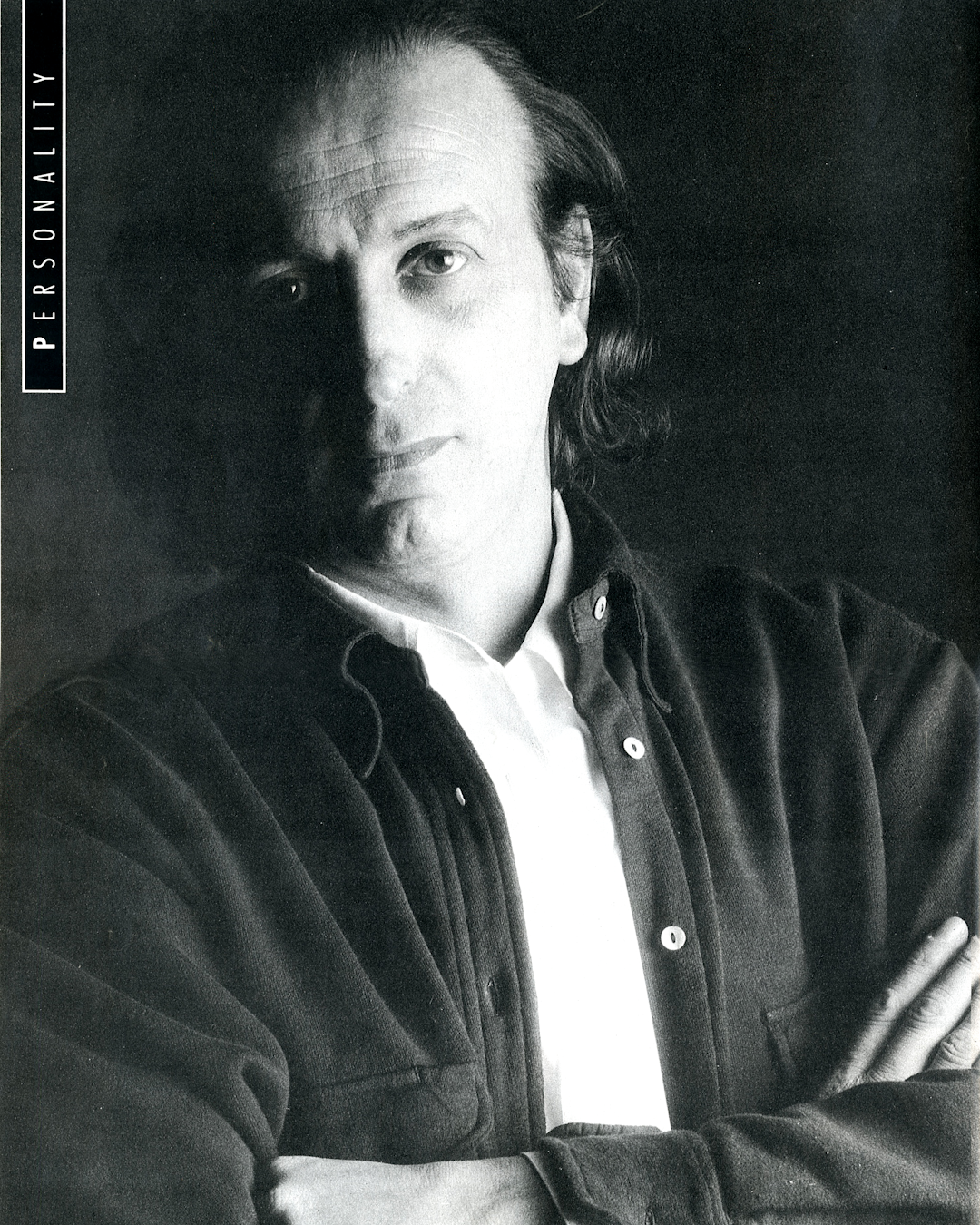
Lorenzo Osti: Yeah, a lot has been going on this year. It’s been super busy. The thing that took most of my time recently was the celebration of my father passing
away. It's been 20 years last Friday, so on June 6th, we organized a talk in Bologna and the opening of a small exhibition at Palazzo Pepoli, a historic museam in the city centre.
And that, honestly, took like the last month. And then in general, yeah, there is a lot to do. The market is not easy, so we’re trying to expand to new markets where we’ll sell more.
Henry: Me and Mark were just saying that the C.P. offerings from Fall Winter 2024 and now SS25 are really great - especially all the pockets on the jackets. Have you looked at any archive jackets to influence the pockets specifically?
Lorenzo Osti: Yes, definitely. This was like a Paul Harvey testament. He's mad about pockets, he's very good at them. I don't know exactly where he took this inspiration from, but there are always references within the archive. Next season, SS26, will be the first season fully designed under the leadership of Leonardo Fasolo, our new head designer.
He grew up assisting Paul in the past, so he has great knowledge. But at the same time, he has his personal view, and I really fell in love with his work. There’s one piece from the collection that really stands out to me.
Henry: A piece that he has already made?
Lorenzo Osti: Yeah, it’s a jacket, but it has a tactical vest on the inside. You can close it and use it as a vest, or you can have it hidden inside the jacket. It's kind of a summary of the most important pillars of the C.P. design code. Military and workwear inspiration with garment dying and fabric innovation. So that really stood out to me, and I really want to be the first to have it.
Henry: Having a new head designer is a big thing. Can we expect a big change in the way he designs from Paul Harvey?
Lorenzo Osti: No, there is a lot of consistency. They both grew up on the same, heritage, the same school of thought, and the same approach of design. Paul was more like a one man show, while Leonardo is very good at getting the team involved and he is very good at leading the teamwork.
Henry: Okay yeah.
Lorenzo Osti: I think this is good because we want to grow in this direction. We want to have a strong and heterogeneous design team, and we need the right person to lead it.
Henry: Speaking of design teams, we actually recently interviewed Anna Bergonzini - your father's graphic designer - and she said that his archive was like 10,000 items large when she worked for him?
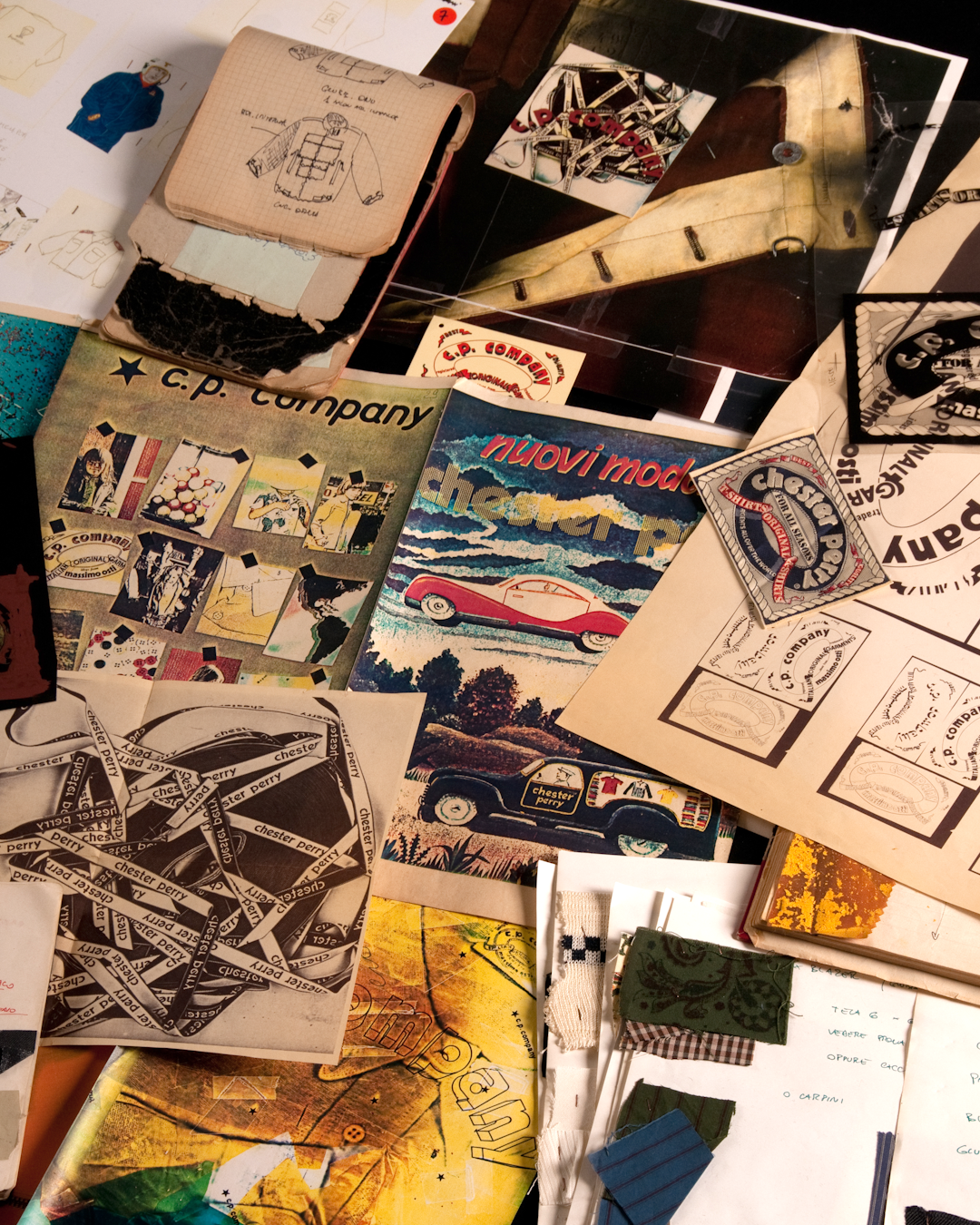
Lorenzo Osti: Yes, I know Anna very well. Actually, it was up to 30,000. It was very big. I like Anna very much. She was actually leading the graphic department I shared an office with when I had a small advertising agency at that time. So I was able to view some of the work, and yeah it was very exciting. The graphic parts are still very relevant today for C.P. and the techniques also. Of course technology has evolved, but there are still many of the same things that we do, like scanning.
Henry: Anna said that so much of her work was using the scanner, like a 3D scanner when she worked for your father.
Lorenzo Osti: No, actually, it was not really a 3D scanner. There was no such technology. It was more like a flatbed scanner. And before that there was the color copier. My father bought the first color copier in Italy. It was a very big machine and very expensive, but it was central in his work because it gave graphics a kind of patina. It reminded him of the effect of garment dying on fabrics, so this was a way to produce on paper what he was doing on fabric. At the Bologna exhibition for his anniversary, we actually have a full wall of graphic design showing how the copier was used to create a visually unique style.
Henry: So do you still use scanning and copying as techniques for C.P. Company design now?
Lorenzo Osti: We still use them. Yeah.
Henry: Not the same machine now though?
Lorenzo Osti: No, not the same machine. We use a mobile scanner. So you can scan objects, but the idea of ageing the picture, it's still here.
Henry: Okay, do the ideas for the C.P. Company T-shirt graphics come from similar methods then? How do they get produced?
Lorenzo Osti: Yes. Graphics for CP have always been very relevant. It's the pillar from which my father started from. But there is not one single unique way that we use. Sometimes we start from creative ideas. Like something we’d like to reproduce or be inspired from. On the other hand, sometimes the printing technique comes first. Most of the time we don't simply print like a screen print, but we try to use a more sophisticated technique.
In the second case, the technique arrives first and then you find a design that fits that. We always have a very artisanal approach to the t-shirts, especially in the most recent seasons.
Henry: The graphics are always great. Slightly changing subject, we should probably talk about the Manchester City partnership. How did that come about?
Lorenzo Osti: It came about pretty naturally. You probably know better than me the relationship that C.P. company has always had with football culture, especially in the north of the UK. So, yeah it was chosen to celebrate that bond. It's been difficult to pick a team, honestly. Whatever you do, some people aren’t going to like. But when we spoke to Manchester City, we found we had a lot of shared values, and honestly, their international reach was one of the reasons we decided to go with them. But what I found more interesting was the bonding between Manchester and Bologna. I realised the two cities have a lot of similarities. They both have a big university and a strong musical scene. They are working-class, industry-led cities. So yeah, we saw many similarities. And at the end, we’ve decided also to sponsor the Bologna football team. So now we have two football teams in two cities that are really similar.
Henry: With you mentioning football culture there, I think what I find really interesting about C.P. company is how varied the customer is. Football fans love it. Music artists love it. People into streetwear love it. It's a universally appreciated brand. Is that something that you've consciously tried to achieve, or has it just happened naturally?
Lorenzo Osti: It’s a very good question. It happened naturally, but for a very specific reason. If you think, most brands sell garments to try to sell you a lifestyle, okay? They show you a kind of lifestyle - it could be luxury, on a yacht. It could be wild and in nature. It could be countryside - whatever. But they use the garment to gain access to this world.
So first, you want to be a part of that world, and through the products, you get a part of that. This is how most brands work.
Now, if you think C.P. Company, since the eighties, has never tried to represent a lifestyle, it has always been 100% focused on the product. Storytelling has always been what we do, and this has been the key to appeal to a much broader audience, but it also means that you don't really control who is picking you up.
You operate this way, and then a terrace guy can see something in your garment. A musician can see something else in your government. Everybody can see something personal, and that's why C.P. has been adopted in such different subcultures and groups. This has been done unintentionally. My father really only wanted to focus on products, and that was his angle.
But when I went and studied, I realised that there is a very specific concept that has been described by a semiologist, he’s called Umberto Eco. He's from Bologna and wrote a book, I think in the sixties, called Opera Aperta. He said what an author thinks of his book or what a painter thinks about their paintings is not important.
What is relevant is what the spectators see in it. Everybody can see something different. Okay. That's the meaning of Opera Aperta. It's a piece of art. It's a piece of work, but it's open to interpretation. I think that my father worked just to focus on the product.
And so C.P. Company became a kind of Opera Aperta and we let anybody identify or pick something out of it. I think this is a very important point of our work. And we still do this.
Henry: So, each consumer finds something personal that they like about C.P. Company, and this can be totally different to what another consumer likes about it? The things they like about it aren’t universal, but this makes the brand universal?
Lorenzo Osti: Exactly.
Henry: So, what was the very first audience that picked up C.P. Company? Did it align with a particular type of person straight away?
Lorenzo Osti: When C.P. Company was created in the seventies, the youth of the time were the first ones who picked up the brand.
So, it was basically a left-wing crowd involved with the artistic scene and political scene in Bologna at that time. From one side, there was a lot of protest - political protest against the government, and protests against everything that was represented by a previous generation. And at the same time, there was a lot of creative energy in Bologna, thanks to the Dams. Dams was the first art school that opened in Bologna, and it was very different from traditional art. It was not about just one art, it was about theater, cinema, music, and art. So these creative people started to mix and there was a very, very creative environment.
My father was designing and living in that space for the people around him. And his brand was picked up because everything he was doing was very different from anything that was there before, it was very kind of, anti-establishment...
These people found in my father's work something that resonated with how they were feeling about society and what was going on. Then Stone Island and C.P. Company ended up in the Paninaro scene. But this Paninaro scene was exactly the opposite. It was a very hedonistic, show-off kind of culture.
It really was a rebound of all the previous political commitment. But again, my father was never selling a lifestyle. Otherwise this product would never been adopted by Panari. It was just a product.
Henry: Yeah. They just liked the product.
Lorenzo Osti: And then from the Paninari we end up in terrace culture. And I'm sure you know the story of how it first got to the North of the UK, but again, they wore it very differently from the Paninari.
Henry: Just leading on from that, how do you see people wearing CP company differently around the world? Do people in the UK wear C.P. company differently to how people wear it in Italy or somewhere in Asia?
Lorenzo Osti: Yes, they wear it differently. In the UK it's very much a uniform for a group identity, you know, such as being a part of terrace culture.
In Italy, it's more worn like elegance with an edge. It's like they wear it to say ‘I have something different from other people, because I'm elegant and sophisticated.’
In Asia, again, it is very different. They're very design driven so they mix it in a totally different style. We sold a lot of loose pants that are now are coming back to Europe, but people in Asia were the first ones to pick up our pants and make them relevant. Now, we have always been strong for outerwear, but they saw something in our pants, and they’ve mixed it up in their style and the pants have became very cool in Japan. And now they’re becoming very cool in Europe also.
Henry: Does the way people are wearing it in different areas affect your design at all?
Lorenzo Osti: No, not really. We really try to focus on being consistent on our design pillars and design methodology. What is important for us is, graphic design, garment dying, fabric innovation, and functional design. Military and workwear inspiration. We always stick to that, and then we let people do what they want with our product.
Henry: What would you say the most important C.P. Company garment of all time is?
Lorenzo Osti: The Goggle Jacket for sure, the Goggle Jacket has been by far the most influential because it introduced an icon of the brand.
The goggle jacket embodies many important aspects of the brand. Yes, there’s garment dying. Yes, it's designed to be functional... The lens is functional, the watch viewer is functional, the big pockets are functional.
But at the same time, that jacket has a kind of evocative power. It’s like something exotic, something that can bring you to different places, and different moments in time. It’s not an everyday thing.
That's why it is so powerful and that's why it has become so iconic. But again, really it’s the people who pick it up and make it iconic.
Henry: Yeah, I find it very interesting, a jacket with goggles on the hood should not be commercial at all, but obviously it is. It seems so futuristic and niche, but this hasn’t pigeonholed it at all.
Lorenzo Osti: Yes. It has became a symbol,
Henry: We spoke earlier about how music is very closely associated with C.P. Company – is music something the brand has always been involved with, even from when your father was doing things?
Lorenzo Osti: Yes. It started with Lucio Dalla. My father and him had a personal friendship and there was a personal passion from my father for his work. So, my dad was probably one of the first people to endorse and use a music artist for promoting garments, because he was gifting him C.P. Company and Lucio was wearing C.P. during concerts. But again, it was a natural thing. It was not a paid sponsorship. He simply liked the product and my father was proud that he was wearing it.
Our relationship with music has always been there. The UK grime scene and Skepta adopted C.P. Company and then the hip hop scene in the south of France adopted C.P. Again, it's always been very natural.
We do a lot of seeding, but it's very spontaneous. Usually we don't even pay - the musician normally asks us if they can get some products and we give it to them.
I cannot tell you what exactly they see in the brand. Maybe we should ask them, but I think it's the kind of evocative power, and that it's different from anything else.
It brings you into another world. And in a music performance, this is part of what they want to achieve... I don’t know, I’m just thinking.
Henry: No, I fully get what you mean. Would you say C.P. Company now is very different to how it was ten years ago or 20 years ago, or would you say it has stayed very consistent?
Lorenzo Osti: Yes, I think it is. C.P. company has 50 years of history, so it's kind of an old brand. Sometimes it has been very consistent from an aesthetic point of view, but not as relevant from a cultural point of view and not commercially successfully.
On the other hand, sometimes it has been very different and done things that you would not expect and it has became very relevant. The Urban Protection line by Moreno Ferrari, done around the year 2000 was totally different from what C.P. was doing at the time, but it was still well received.
So, long story short, C.P. must be consistent in what it does and focusing on product, but the kind of product should change over time. That's why it's different from 10 years ago and it’s this ability to understand what's going on in society to remain culturally relevant to a contemporary audience.
This is what makes C.P. Company successful. Again, in the past, C.P. Company made great products, but they were not the right product for the right time in history.
Today C.P. Company looks different from how it did 15 years ago, and it's very different from what it was 50 years ago. But somehow, what we're doing today is relevant for the people of today.
Henry: Could you break the brand down decade by decade since it started - in terms of what the focuses would've been?
Lorenzo Osti: Sure. In the seventies and the eighties, C.P. was innovative, and it was totally different than anything else. At the time it was my father’s only brand, so he was using it to include all of his ideas.
Then Stone Island arrived. So, from the eighties and nineties, C.P. Company and Stone Island were different. Stone Island was more colourful and extreme. C.P. was more sophisticated – for a slightly more mature consumer.
Then after, there was some up and downs that aren’t even worth mentioning, Such as it being designed by Romeo Gigli. That was not the right designer.
Then since then, there has been two things. There's been Moreno Ferrari, who was very different. Urban protection, all black. Nylon jackets to protect you from the threats of the new millennium. Very different but very relevant.
Then there has been Alessandro Pungetti design. Very nice, very consistent. Very similar to the original C.P., but probably not resonating quite as well with what was going on in society in that moment.
And then there is a last period by Alessandro and Paul Harvey, where C.P., I think, went back to the original vision of the seventies by focusing on innovation.
Henry: I've just got one more question, which is more just a question for me personally... I know when we interviewed you before we asked what your favorite of your father's garments was, and you said the Levi's Phillips ICD - could you expand any more on that collaboration? It seemed far ahead of its time.
Lorenzo Osti: It was, it definitely was. So basically, he was working with Levi's on this ICD industrial clothing division. It was an outerwear project following a pants project. At the time my father was very fascinated by technology and everything that was new, so when he had the possibility to work with Philips, he was very excited.
So, they asked themselves - what should a garment with technology do? They took all the cutting-edge technology at that time - the smallest mobile they had… an MP3 player, and put it all into a functional object. One was a tactical vest, and the other one was like a rucksack.
Both were technology containers - a way to bring technology around with you - but both of them transformed into jackets. The vest, you can take out and it turns into a long raincoat, and the other one becomes a field jacket. So, they’re like wearable technology packs that turn into jackets.
I think it was great because it put together all of my father's design skills into a new kind of functional design. Yeah, I agree with you it, is one of the most interesting things my father did.
Henry: Do you think we'll ever see a wearable electronics come back? Will C.P. company ever create a wearable electronics line?
Lorenzo Osti: I must say it was very fascinating, and I have actually tried to do something. I worked with Google for two years on a project that was very close to seeing the light.
Henry: With C.P. Company?
Lorenzo Osti: Yes, Google was doing something called the Google Jacquard project… I think I signed an NDA, but maybe it has expired now because it was in 2018.
Anyway, I approached Google in 2018 because I wanted to work with their technology. At the time, they had this project called Google Jacquard. I presented a project, they liked it and we started to work together, but then COVID arrived and everything slowed down, and eventually Google stopped the whole Jacquard Project. So my project never saw the light.
But yeah, I was very close to doing an updated version of the wearable electronics project. It's not easy to understand what is really useful in terms of technology on a jacket. But I think I had a very good idea, only I was a bit unlucky from a timings perspective.
Henry: Maybe in the future?
Lorenzo Osti: Yeah, absolutely.
Henry: That's great. I think that's pretty much everything that i wanted to ask Lorenzo, and I think that's our 45 minutes anyway. Is there anything you'd want to add about C.P. Company or anything that you'd like to say?
Lorenzo Osti: No, I think you covered pretty much everything. Thank you very much.
Henry: Okay. Thank you. Lovely to chat, Lorenzo, and have a great day.
Lorenzo Osti: Thank you very much, Henry, you've been very nice. Thank you very much. Lovely to meet you.