“Mammut x Nigel Cabourn - Direttissima”
Magazine feature for the Mammut x Nigel Cabourn collaboration, uncovering the story behind the collabs inspiration.
“In Switzerland, parents don’t tell their children of the boogeyman, instead they tell them about The Eiger – a 3,970m mountain, nicknamed ‘Murder Wall.’ That nickname isn’t some kind of exaggeration, since 1935, at least sixty-four climbers have died attempting the mountain’s notorious North Face. The Eiger is one of the most harsh, inhospitable, and unforgiving peaks on the planet – it's the kind of mountain you’d do anything not to spend four weeks clinging to. Yet in 1969, that’s exactly where six Japanese climbers found themselves.
The crew arrived in Grindelwald, a small Swiss village nested at the foot of the Eiger, hauling almost a ton of gear, hundreds of bolts and pitons, more than 8,000 feet of rope, food, sleeping bags, and all manner of thick down filled clothing. Onlookers assumed the Japanese team were overprepared - hundreds of people had climbed the Eiger before, and with much, much less gear - but this team’s goal wasn’t just to reach the summit, it was to carve a new, direct line straight up the mountain’s North Face. This route would become known as the Japanese Direttisima.
For the next month, the crew would inch gingerly up the Eiger’s blank, unforgiving face – constantly being reminded of how it earnt its grim moniker. The crew distracted themselves by smashing piton after piton into the Swiss rock, allowing them to ascend a few feet at a time. They spent days dangling from the Eiger, then days turned into weeks. Never knowing if what they were trying to achieve was actually possible. The only comfort in the Eiger’s abyss of unknown, was each other - the crew were literally bound to one another - by what their leader, Takio Kato, called a rope of trust.
Each part of the human chain was as vital as the last to the group's survival, but attention was collectively fixed on one in link in particular. Michiko Imai, a 27-year-old female climber. No woman had ever summited the Eiger via a direct route. But despite the odds, in a year when Switzerland still denied women the right to vote, Michiko tied in alongside her male teammates and proved that endurance and courage are not confined to gender. The wall swallowed light, sound and time, but Michiko’s grit & unwavering determination managed to cut through.
On August 15th, 1969, a whole month after their departure from Grindelwald, the crew found themselves standing 3,790m above sea level. The colossal question mark that had been circling their minds for an eternity had finally been answered – a Japanese team had managed to successfully traverse a line right through the heart of the Eiger’s North Face. The Direttissima demanded everything from them, and in return their names were etched into the history books forever. None shone brighter than Michiko Imai's.
Now, half a century on, this legendary story has been revisited by Nigel Cabourn and Mammut - two names separated by continents but connected by a shared respect for the Japanese Direttissima. When Cabourn first heard the story of the ascent, he was captivated not just by the crew’s achievement, but by Michiko. Her discipline, and the sheer refusal to give in.
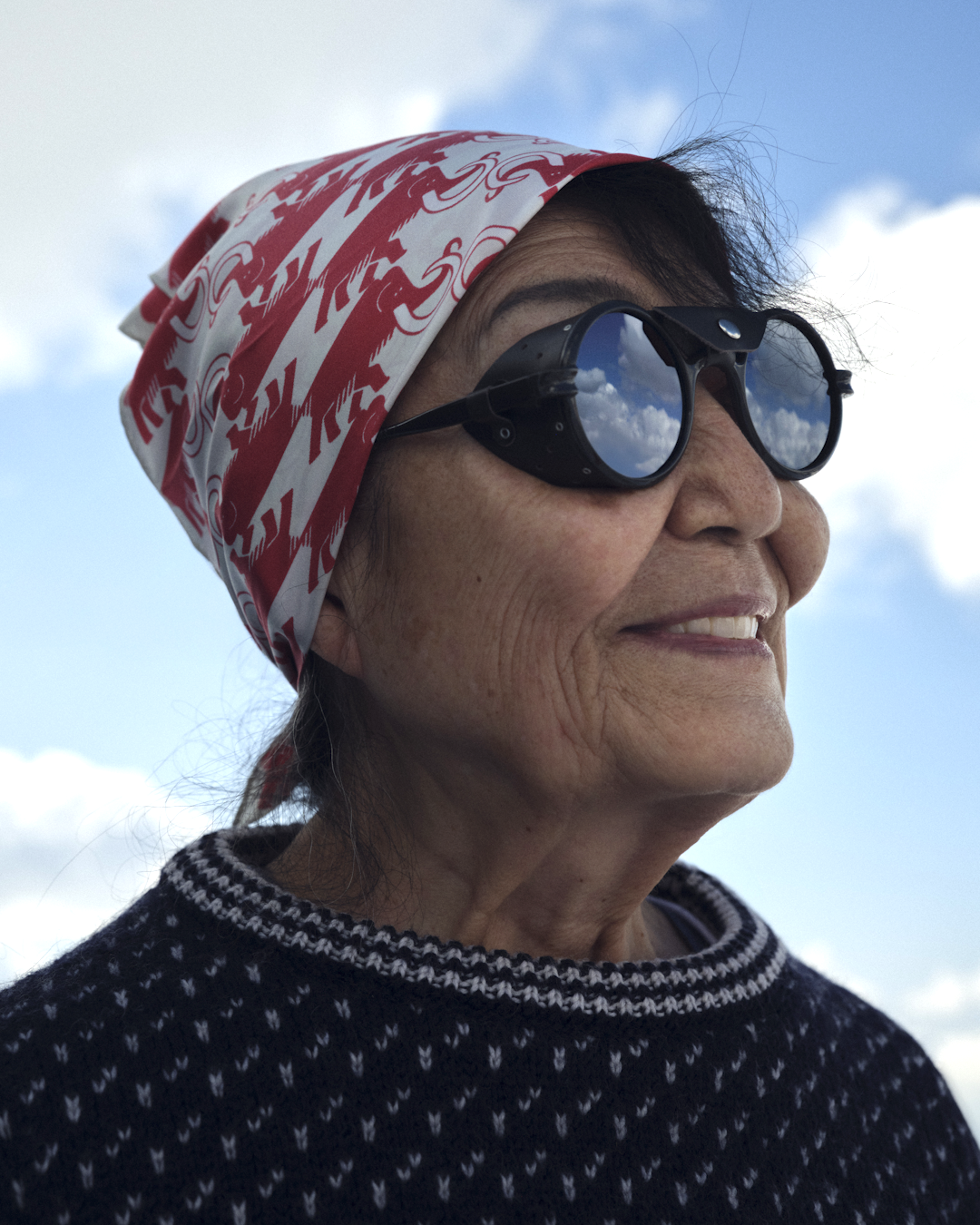
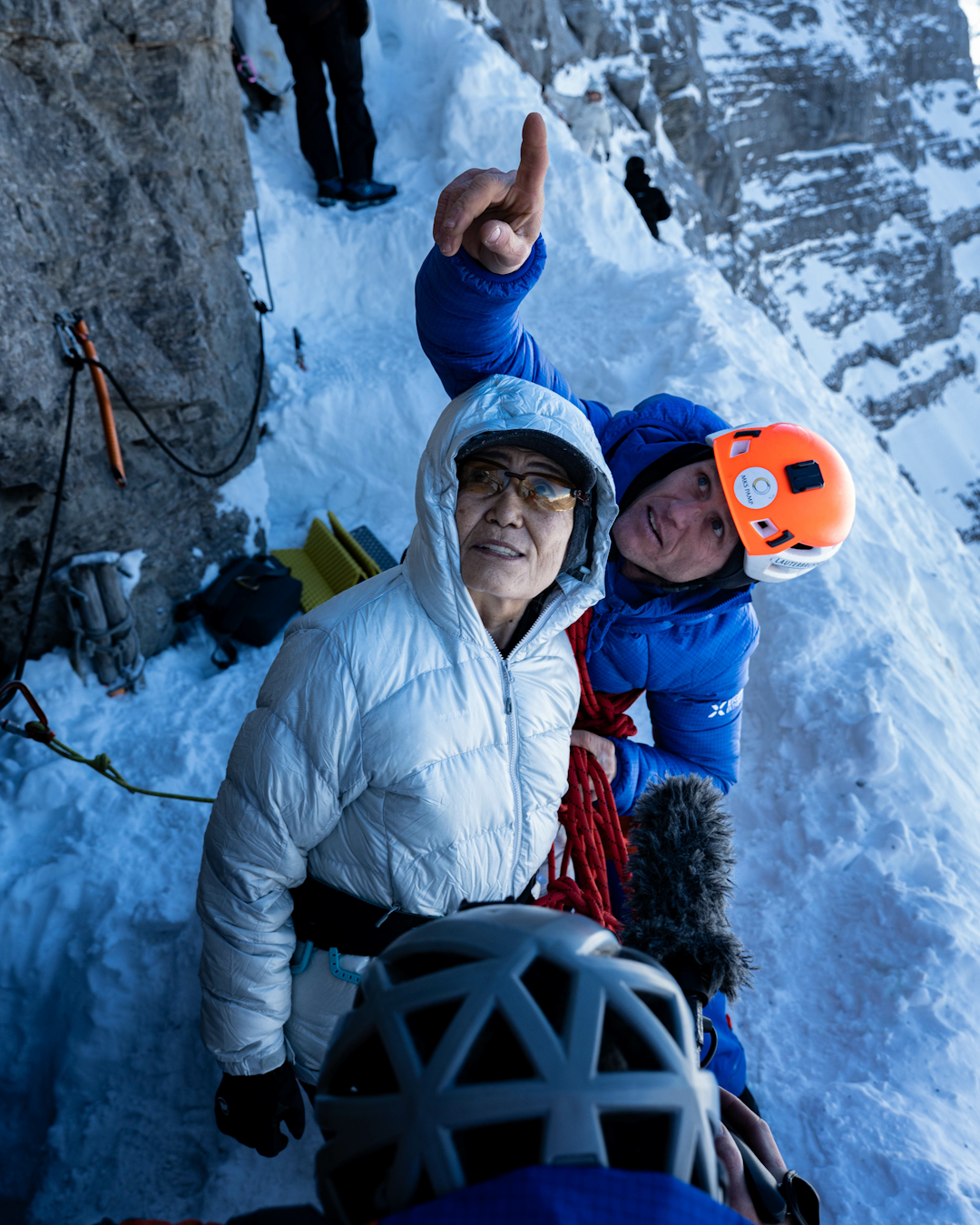
“Michiko Imai is a pioneer, she is so brave, and it was a pleasure to meet her at the Eiger - a true legend”
When Mammut invited Cabourn to reimagine the garments worn during the Japanese Direttissima, he didn’t just want to design clothes inspired by the ascent, he wanted to bring them into the modern day, while staying true to their original design. To do so he dived headfirst through mountaineering history, studying the original gear piece by piece - quilted down jackets, heavy wool sweaters, corduroy climbing pants, robust cotton shells. He pored over every photograph, sketch, and surviving artifact from the expedition. Every stitch connected him to what Michiko felt during that brutal month on the Eiger.
“Archival garments are the guide for detail , but we have to make them relevant for todays consumer. Fit is very different, as our whole physical structure has changed from when those garments were first worn”
The result of Cabourn’s scrutinous attention to detail is a monumental 12-piece collection that fully resurrects the garb worn during the Japanese Diretissima, right down to the very last detail.
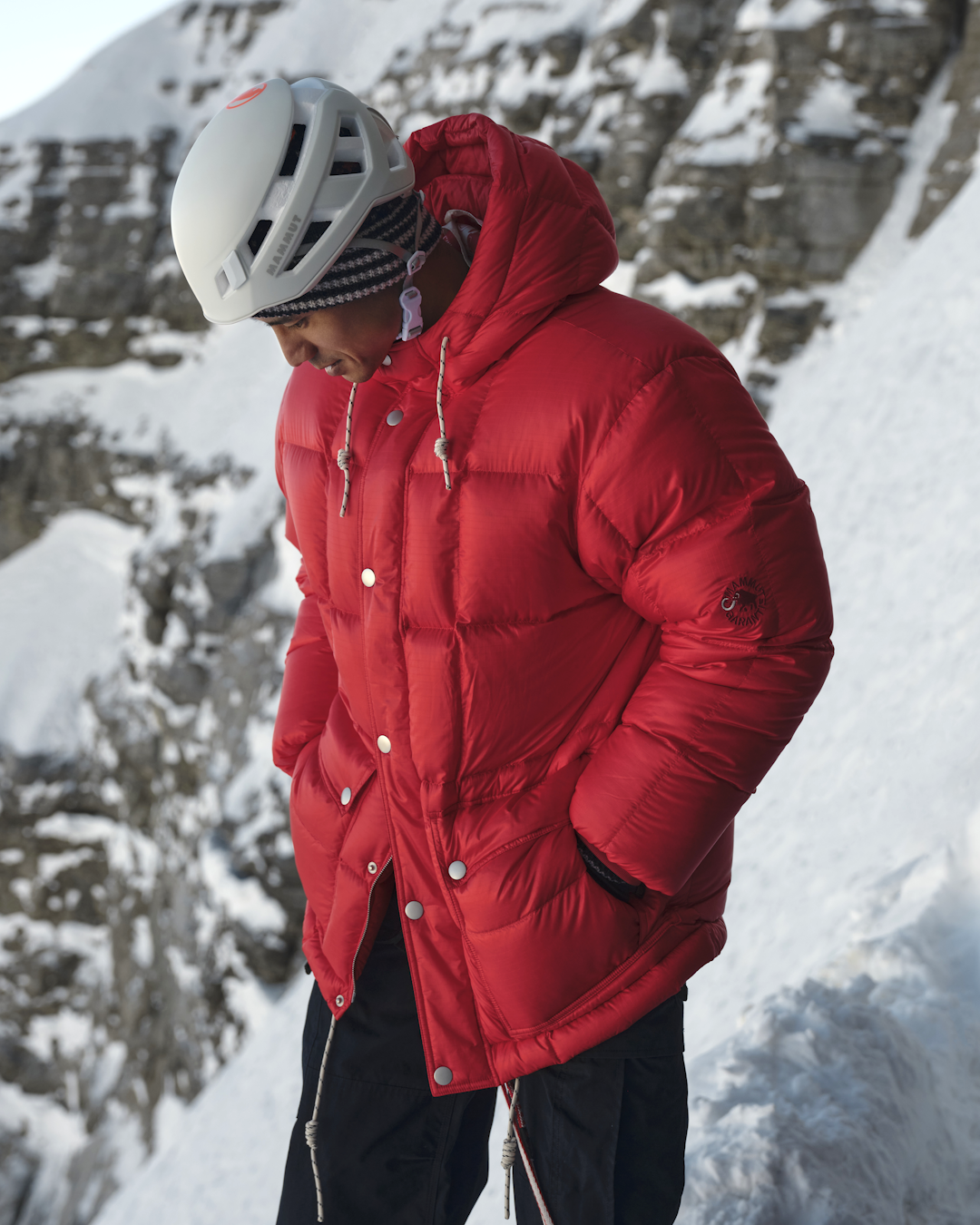
Standouts from the collection include enormous down-filled parkas in shades of red, white, and blue - modelled from the jackets that acted as the crew’s only lifeline against the subzero temperatures. Blanket coats that have been cut from authentic Swiss Army cloth, and corduroy climbing pants and jacquard-patterned wool sweaters that honor the analog elegance of a bygone alpine era. Even the one-piece base layers, which would look a bit like something your grandfather would have worn to turn the lights out, have been reimagined in a way that only Cabourn could make cool.
“The choice of fabrics was a joint decision with Mammut as we needed to blend heritage fabrics with practical and fit for purpose fabrics - a true collaborative approach”
Cabourn's meticulous fabric selection is as thoughtful as the legend they were inspired by: classic materials such as Ventile® cotton, Scottish wool, and Swiss blanket cloth have been fused with modern tech like Pertex® Quantum linings and DRY DOWN insulation. It’s clothing that manages to look backward and forward at the same time - crafted with the durability and character of 1969, but performance tuned to make sense in the modern world.
And of course, there was only one location that could do the collection justice...
The campaign for the collaboration was shot against the same unforgiving backdrop that inspired it - The Murder Wall. Climbers Tatsuya “Timmy” Aoki and Yuka Kobayashi joined Cabourn and Michiko Imai herself in returning to the Eiger - not to conquer it, but to pay tribute. The visuals from the campaign are nothing short of mind-blowing. The crew even recreated the iconic photo of Michiko dangling above space and time, only this time with Yuka Kobayashi taking her place.
“We hope that new generations of outdoor enthusiasts take inspiration from Michikos story and believe anything is possible with determination and grit”
Back in London, the collection was unveiled with the same attention to detail that defined both the climb and Cabourn’s efforts. The pop-up featured the complete collection, alongside glowing tent installations, artifacts from the Japanese Direttissima, and a screening of a short film that detailed Michiko’s story. The pop-up functioned not only as a way for people to lose themselves in Cabourn’s work, but also as a way to totally immerse themselves in the realities of the 1969 ascent.
The Japanese Direttissima was never just a climb. It was a month-long slog of endurance, humility, and defying the odds. Michiko Imai never imagined the legacy she’d leave while hauling a bag full of pitons through Grindelwald, but now, more than fifty years later, her story is more relevant than ever.
Nigel Cabourn & Mammut stands as a blueprint for everything a collaboration should be. It has been built on reverence, and manages to reimagine historical garments without parodying the past. It’s not nostalgia, it’s legacy.